


How to Choose the Right Electrochemical Cell for Your Experiment

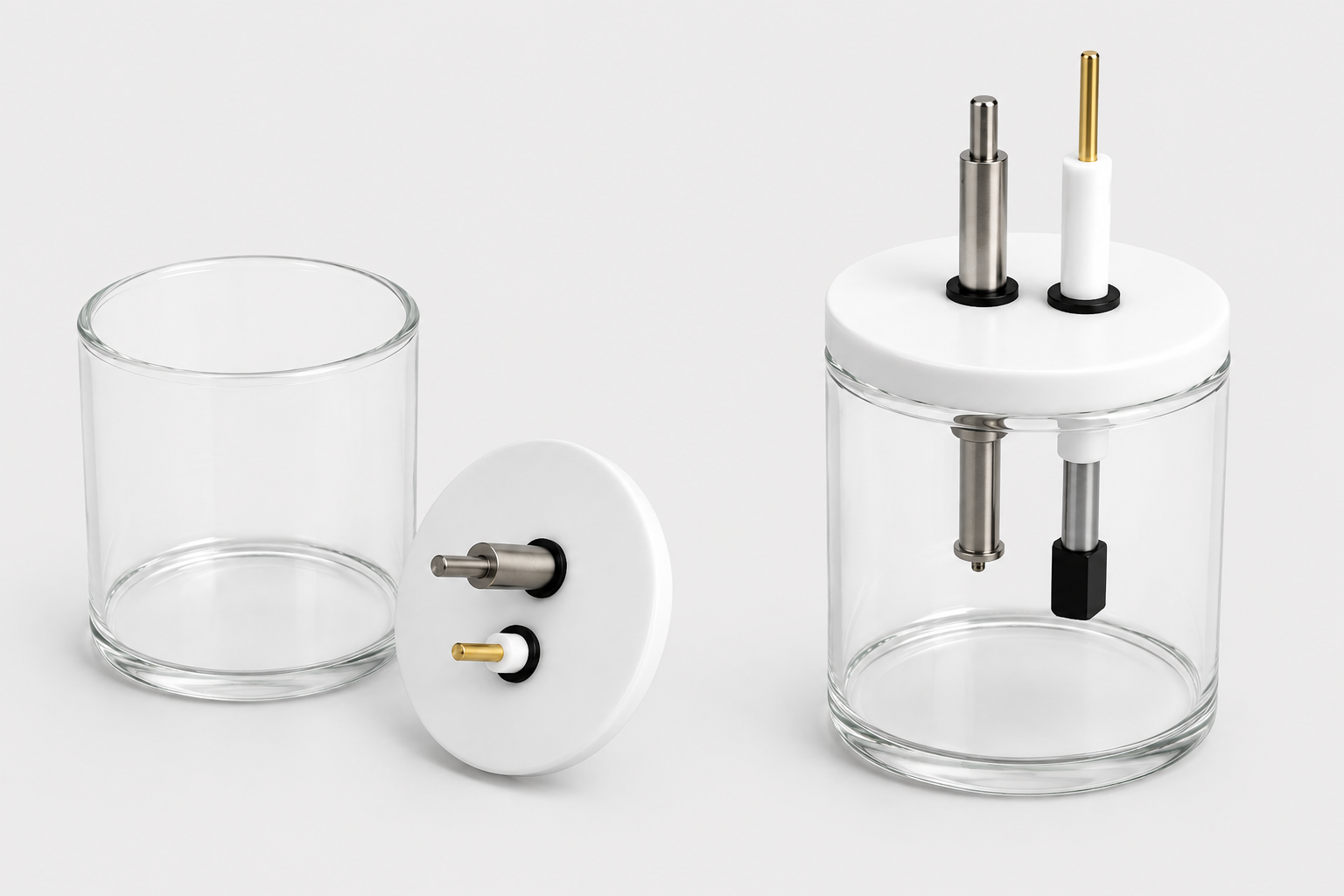
How to Choose the Right Electrochemical Cell for Your Experiment
A practical overview of electrochemical cell applications, structural differences, and selection logic for battery research, electrocatalysis, corrosion testing, sensor development, and fundamental electrochemistry.
Why the Electrochemical Cell Matters
In many electrochemical experiments, the cell is often treated as nothing more than a container. In practice, that’s rarely the case.
The way the cell is built — how the electrodes are arranged, how well it is sealed, even how the electrolyte is handled — can directly affect how stable your data is.
At its core, an electrochemical cell includes two electrodes and an electrolyte. Ions move through the solution, while electrons travel through the external circuit, completing the reaction. Depending on the setup, the cell can either consume energy or generate it.
When a power supply is applied, it works as an electrolytic cell. Without external input, it behaves as a galvanic cell.
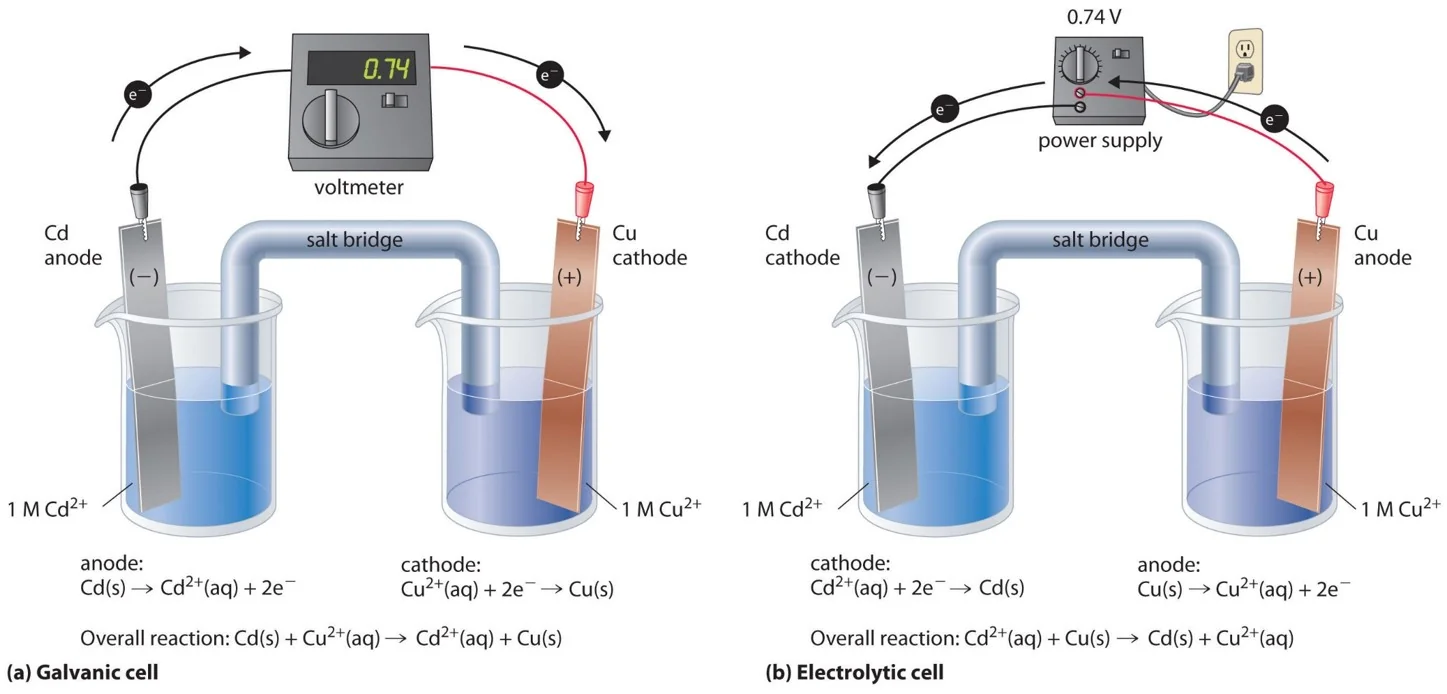
Small Structural Details Can Change Experimental Results
This becomes particularly relevant in corrosion testing. A corroding metal surface can effectively act like a short-circuited galvanic cell — oxidation and reduction are happening at the same time, but no useful electrical work is produced.
In real experiments, small details matter more than expected. Poor sealing, unstable electrolyte conditions, or inconsistent electrode positioning can easily lead to drifting signals or irreproducible results, especially in long-term measurements.
Applications of Electrochemical Cells
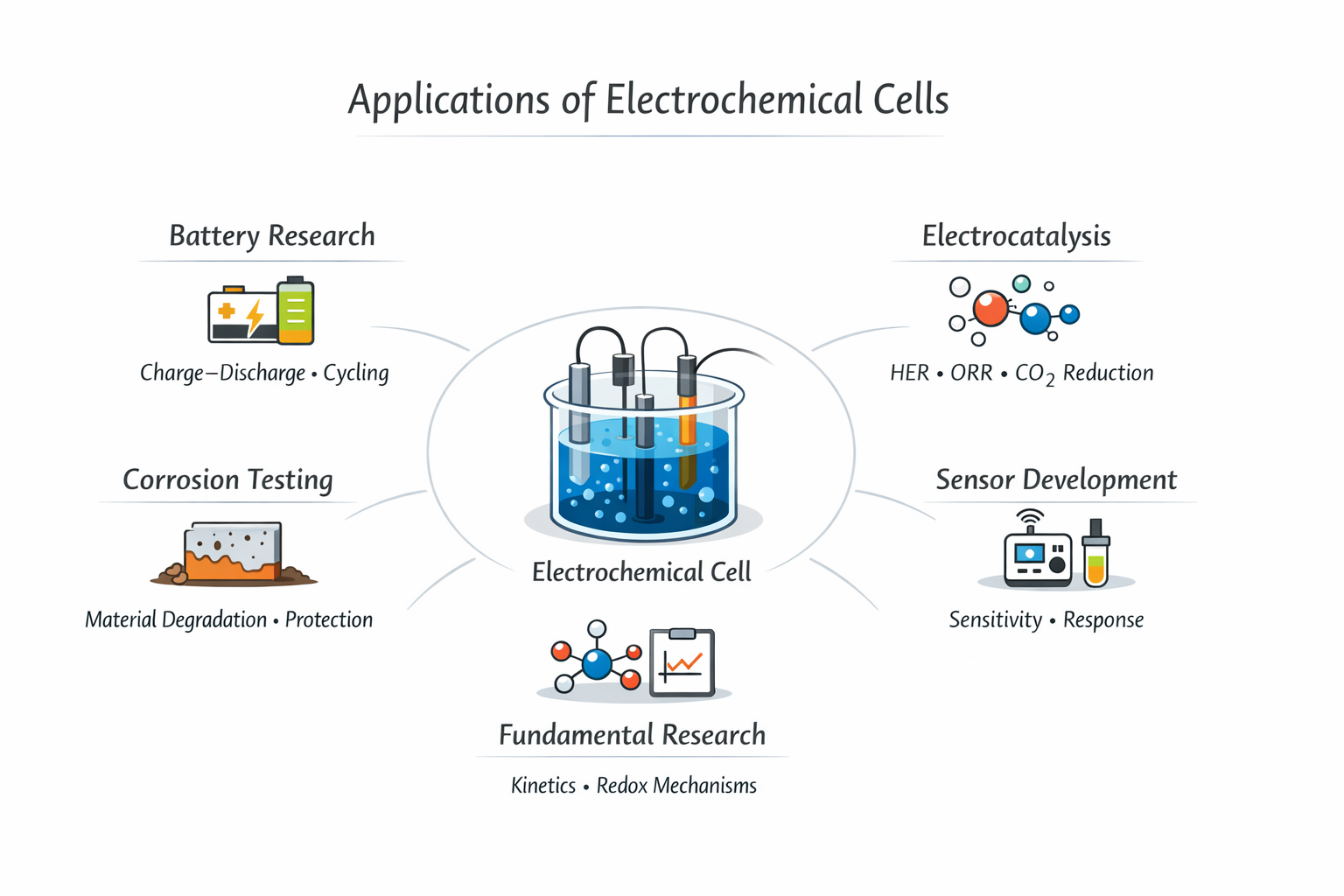
Electrochemical cells are widely used in both laboratory research and industrial applications. In practice, the exact application depends on cell configuration and the type of electrochemical measurement being performed.
Battery Research
Electrochemical cells are commonly used to evaluate electrode materials in lithium-ion batteries, sodium-ion batteries, and other energy storage systems. They enable controlled charge–discharge testing and allow researchers to monitor performance over time. In real experiments, factors such as cell sealing, electrolyte stability, and long-term cycling conditions become critical, especially during extended battery testing.
Electrocatalysis
In electrocatalysis studies, electrochemical cells are used to investigate reactions such as hydrogen evolution reaction (HER), oxygen reduction reaction (ORR), and CO₂ reduction. The focus is not only on whether the reaction occurs, but also on key performance metrics such as overpotential, current density, catalytic efficiency, and long-term stability. Even small differences in cell setup can significantly affect results, making consistent electrochemical cell design essential.
Corrosion Testing
In corrosion testing, electrochemical cells are used to simulate controlled environments and evaluate material degradation and corrosion behavior. Typical setups allow testing of coatings, corrosion inhibitors, and metal alloys under accelerated conditions. In many cases, what appears to be a simple corrosion system is effectively functioning as a short-circuited electrochemical (galvanic) cell.
Sensor Development
Electrochemical cells are also widely used in the development and testing of electrochemical sensors, biosensors, and gas sensors. Key performance parameters include sensitivity, response time, and selectivity. Maintaining stable experimental conditions is critical; otherwise, it becomes difficult to distinguish whether signal changes originate from the sensor itself or from the testing environment.
Fundamental Research
In fundamental electrochemistry research, electrochemical cells are used to study reaction kinetics, diffusion processes, and redox mechanisms. Most measurements are performed using a three-electrode electrochemical system, consisting of a working electrode, reference electrode, and counter electrode. This configuration provides improved control over electrode potential and measurement accuracy, resulting in more reliable and reproducible data.
Choosing the Right Electrochemical Cell Structure for Different Experimental Needs
In many electrochemical experiments, the electrochemical cell is often treated as nothing more than a simple reaction container. In practice, however, its cell structure and design can directly influence experimental results.
Factors such as whether the cell is sealed, temperature-controlled, or compartmentalized may seem like minor details, but they often determine data stability, reproducibility, and measurement reliability.
Different types of electrochemical experiments require different cell configurations. In many cases, selecting the right electrochemical cell structure is more critical than changing electrodes or electrolytes.
Sealed vs. Unsealed Electrochemical Cells
Before selecting a specific electrochemical cell, it is essential to understand the differences between sealed and unsealed systems.
Unsealed Electrochemical Cells
Unsealed electrochemical cells (open cells) feature a simple structure and flexible operation, making them suitable for routine testing, quick experiments, and basic electrochemical measurements. However, because they are exposed to the atmosphere, factors such as electrolyte evaporation, oxygen contamination, and environmental fluctuations can affect experimental results over time.
Sealed Electrochemical Cells
In contrast, sealed electrochemical cells isolate the system from the external environment, providing a more stable, controlled, and reproducible testing condition. For long-term experiments, inert atmosphere studies, and high-precision measurements, sealed systems are generally more reliable.
Common Types of Electrochemical Cells
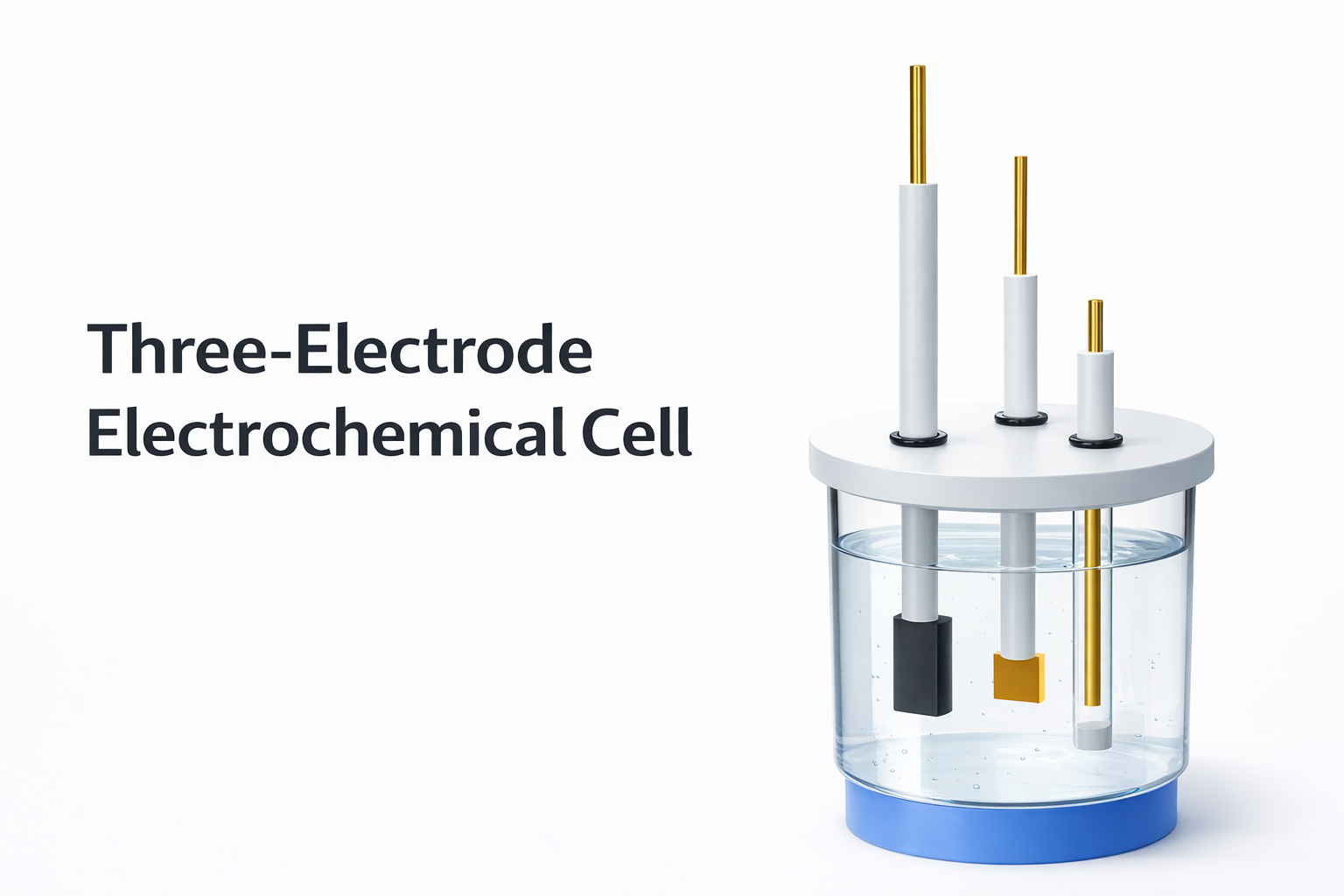
Sealed Electrochemical Cell
Sealed electrochemical cells are primarily used in applications where strict environmental control is required, such as preventing the influence of air, moisture, or contaminants.
In practice, these cells are often used with inert gases (N₂ / Ar) and are widely applied in battery research, electrocatalysis, and sensitive electrochemical analysis.
- Isolates air and contaminants, improving experimental stability
- Supports inert atmospheres (N₂ / Ar)
- Suitable for long-term testing and high-precision measurements
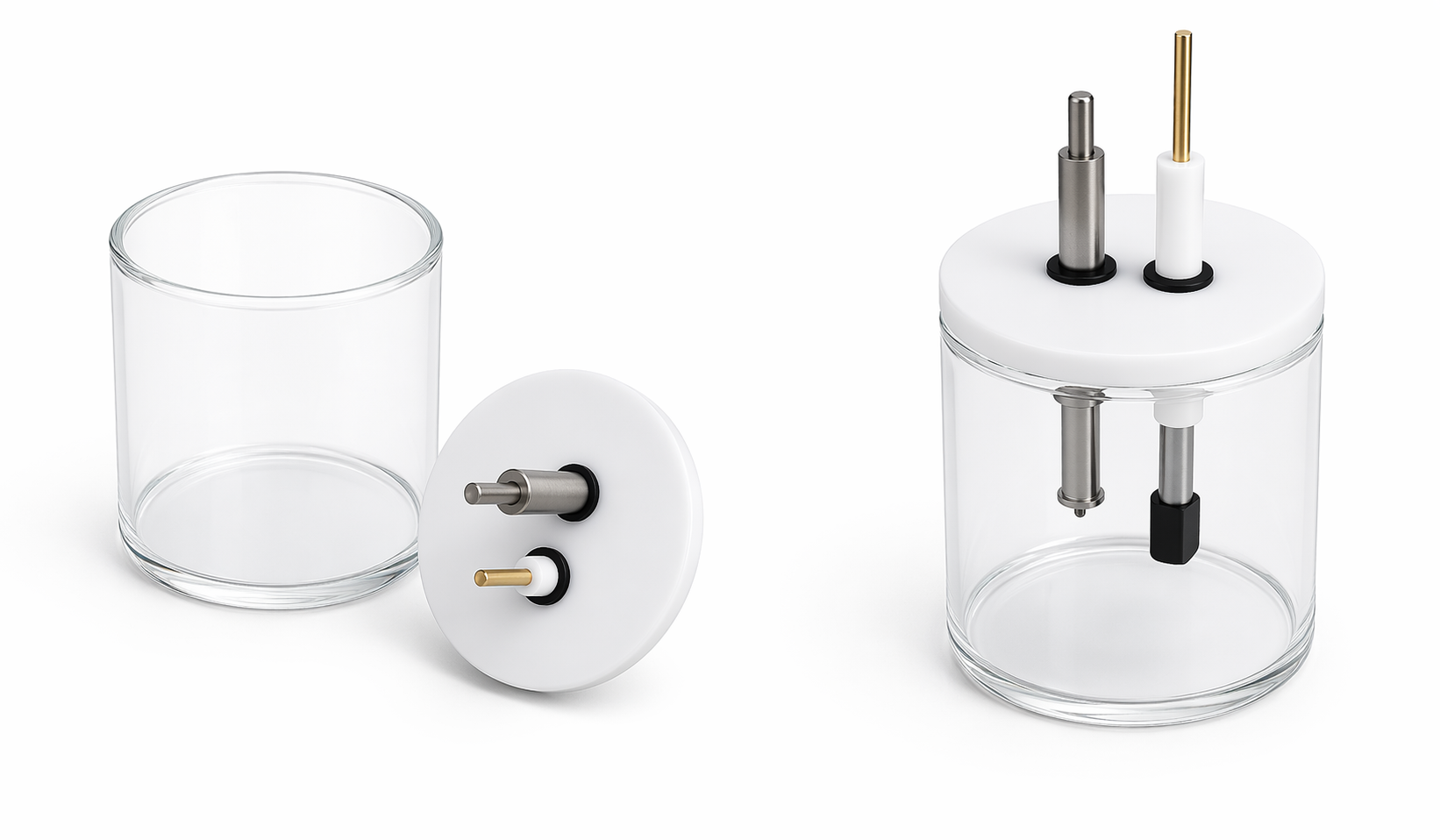
Unsealed Electrochemical Cell (Open-Type)
Unsealed electrochemical cells are the most common basic configuration in laboratories, typically consisting of a glass electrochemical cell, beaker, or open reactor system.
Their advantages lie in simplicity, ease of operation, and flexibility, making them ideal for rapid testing, cyclic voltammetry (CV), and fundamental electrochemistry studies.
- Simple structure, easy to operate
- Flexible electrode positioning
- Suitable for short-term experiments and quick screening
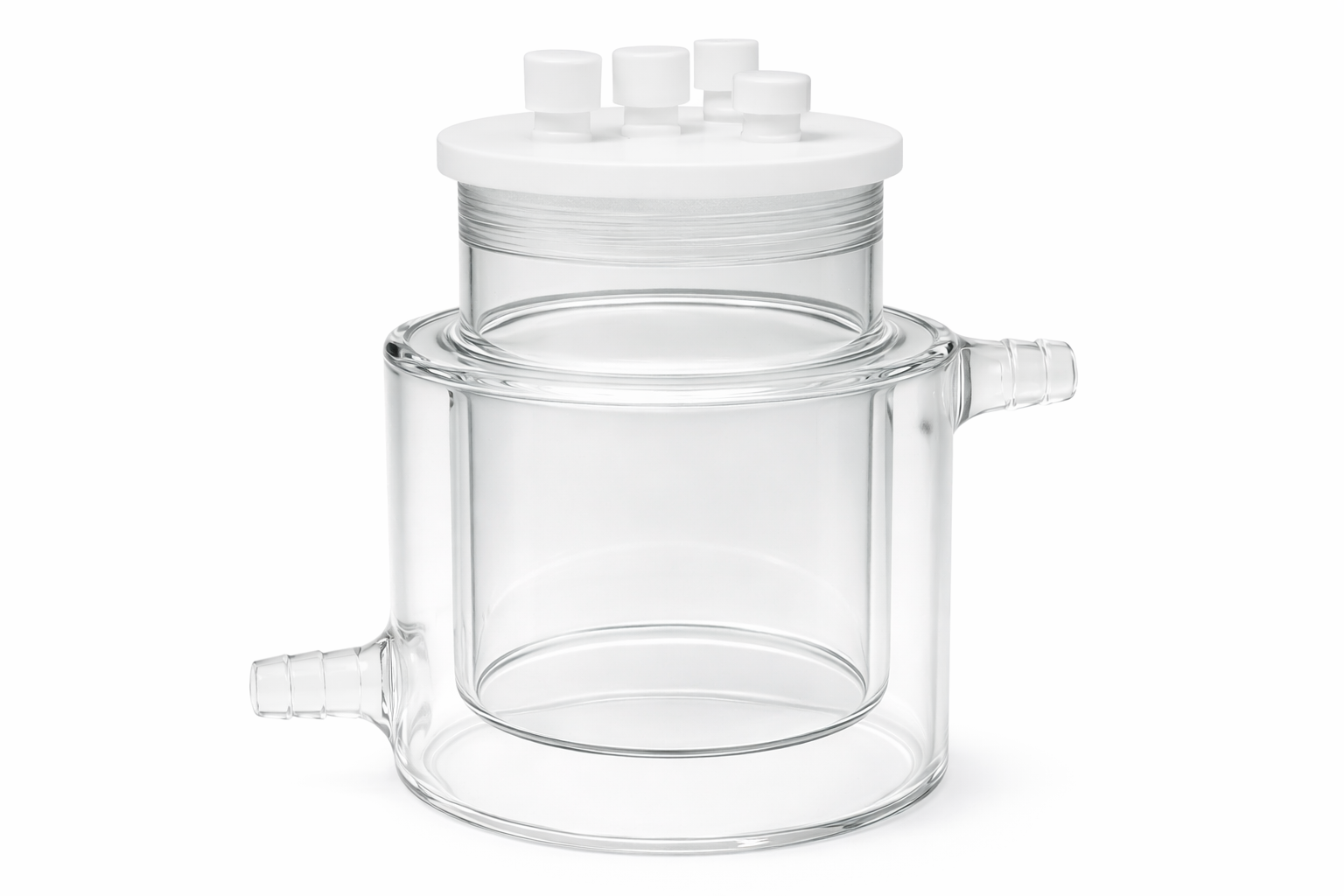
Jacketed Sealed Glass Electrochemical Cell
For experiments requiring temperature control, jacketed electrochemical cells provide additional stability. By circulating a thermostatic fluid through the jacket, the system temperature can be precisely regulated, minimizing the influence of temperature fluctuations on electrochemical measurements.
These cells are commonly used in thermodynamic studies, electrochemical kinetics analysis, and battery performance testing.
- Enables precise temperature control
- Improves data stability and reproducibility
- Suitable for temperature-dependent electrochemical experiments
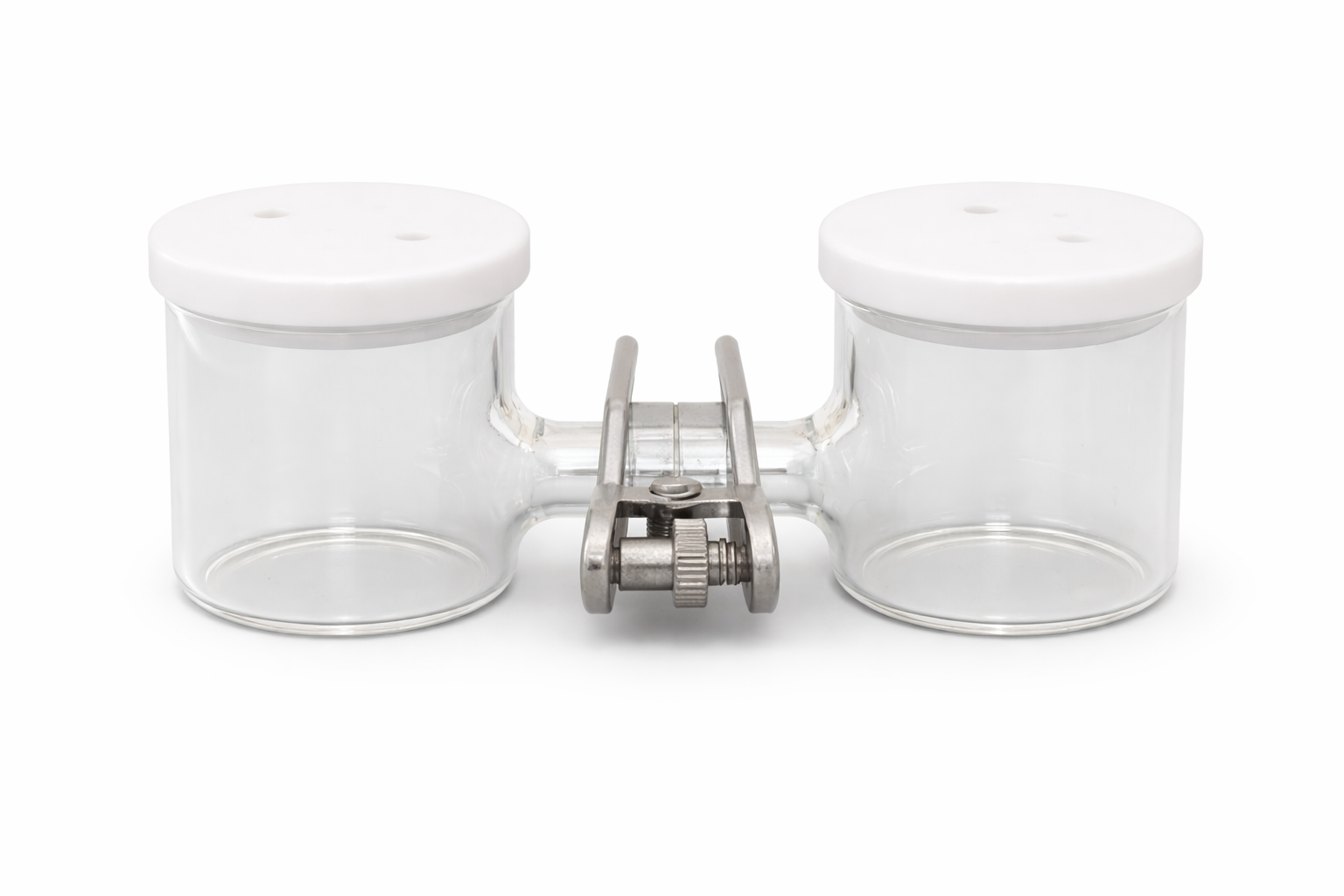
H-Type Sealed Electrochemical Cell
The H-type electrochemical cell separates the anodic and cathodic compartments using a membrane or separator, making it suitable for experiments where product crossover must be avoided.
In electrocatalysis, electrolysis, and CO₂ reduction studies, this design provides a clearer and more independent reaction environment.
- Separates reaction zones, reducing interference
- Compatible with membrane integration
- Enhances measurement accuracy and reproducibility
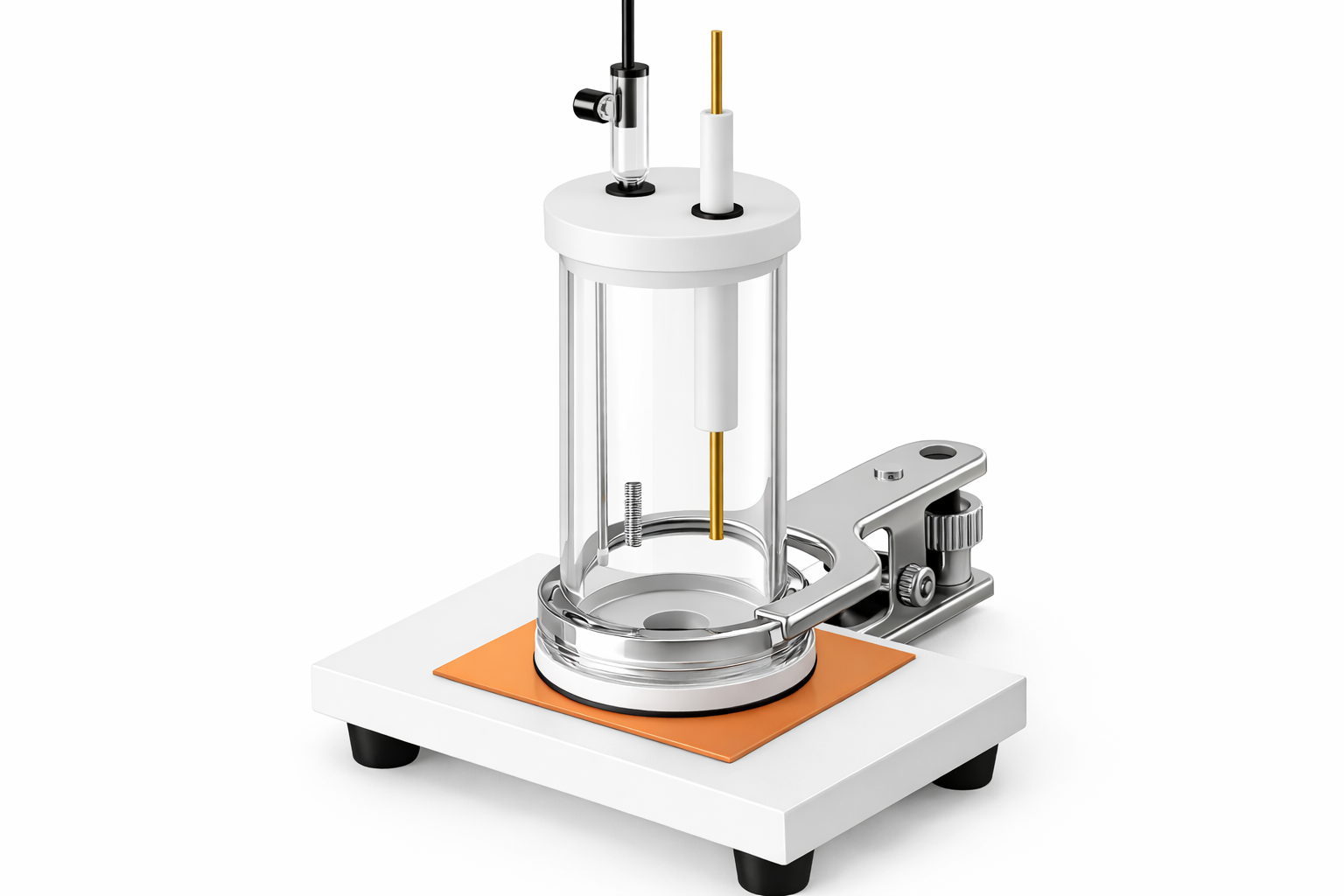
Corrosion Testing Electrochemical Cell
This type of electrochemical cell is specifically designed for studying and evaluating corrosion behavior and material degradation.
By establishing a stable electrochemical environment, it enables accurate analysis of metals, coatings, and alloys under controlled conditions.
- Designed specifically for corrosion testing applications
- Supports three-electrode electrochemical systems
- Suitable for long-term corrosion measurements
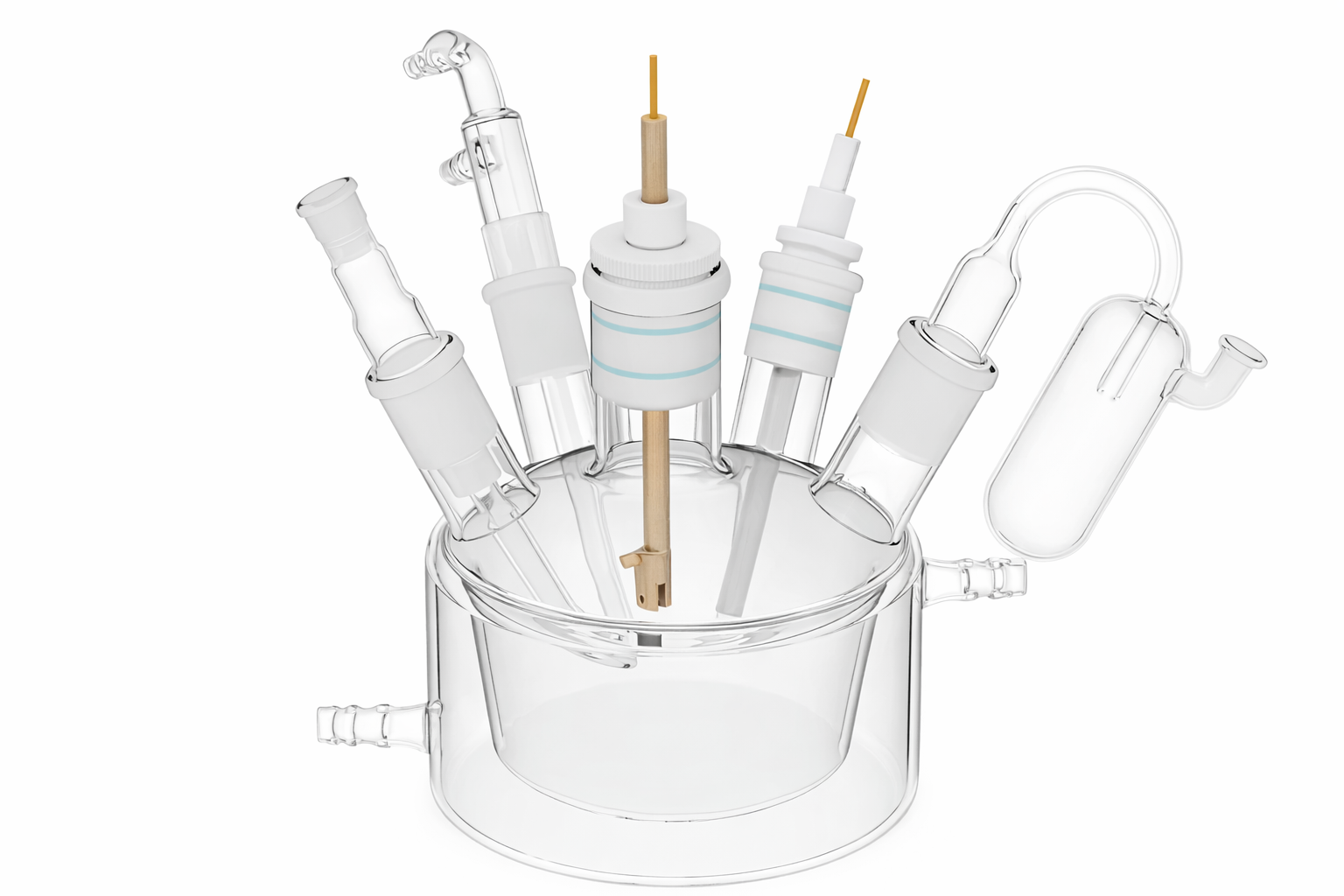
Five-Port Jacketed Sealed Electrochemical Cell
The five-port electrochemical cell design allows for multiple electrodes and gas interfaces, making it ideal for complex electrochemical setups and advanced research applications.
Combined with a jacketed structure, it enables precise temperature control and provides a stable thermal environment. This type of cell is widely used in electrocatalysis, battery testing, gas-involved reactions, and long-term stability studies.
- Multi-port design for complex experimental configurations
- Supports external temperature control systems
- Sealed structure minimizes environmental interference
FAQs About Electrochemical Cells
- Just testing something quickly → Open cell
- Need stable conditions → Sealed cell
- Temperature matters → Jacketed cell
- Reactions need separation → H-type
- Studying corrosion → Corrosion cell