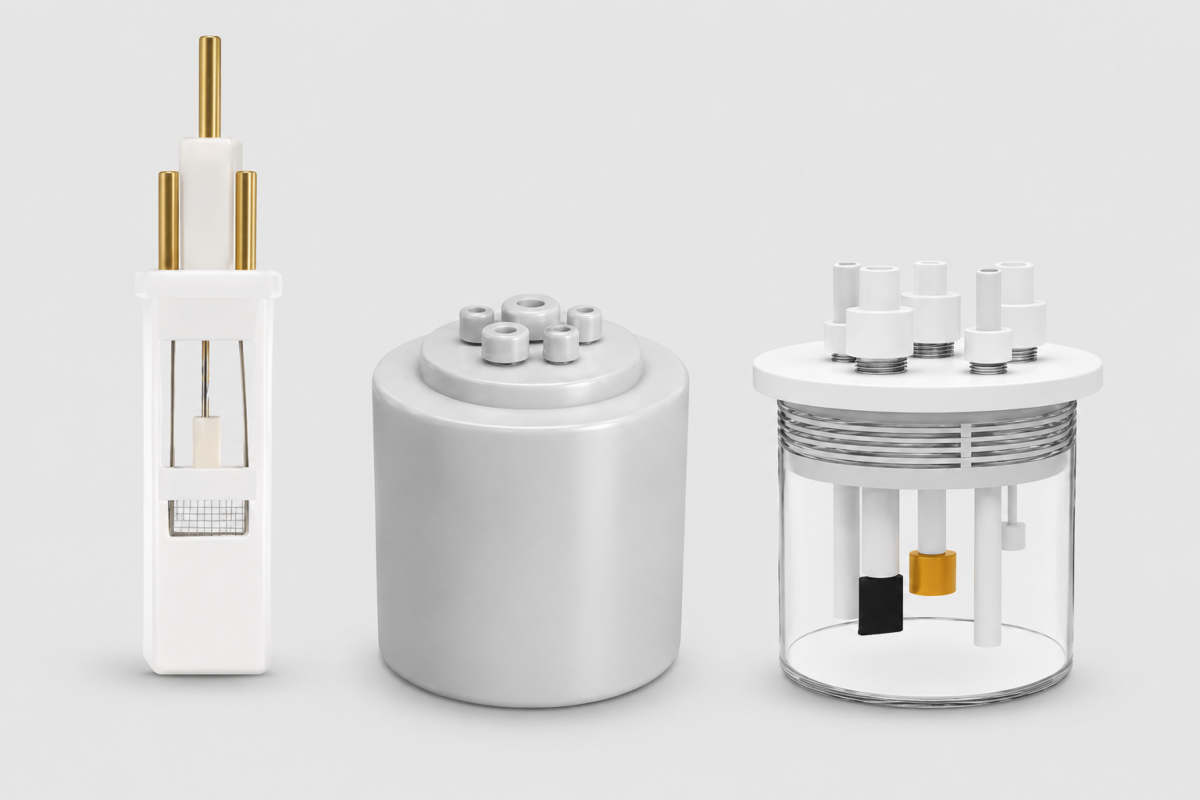
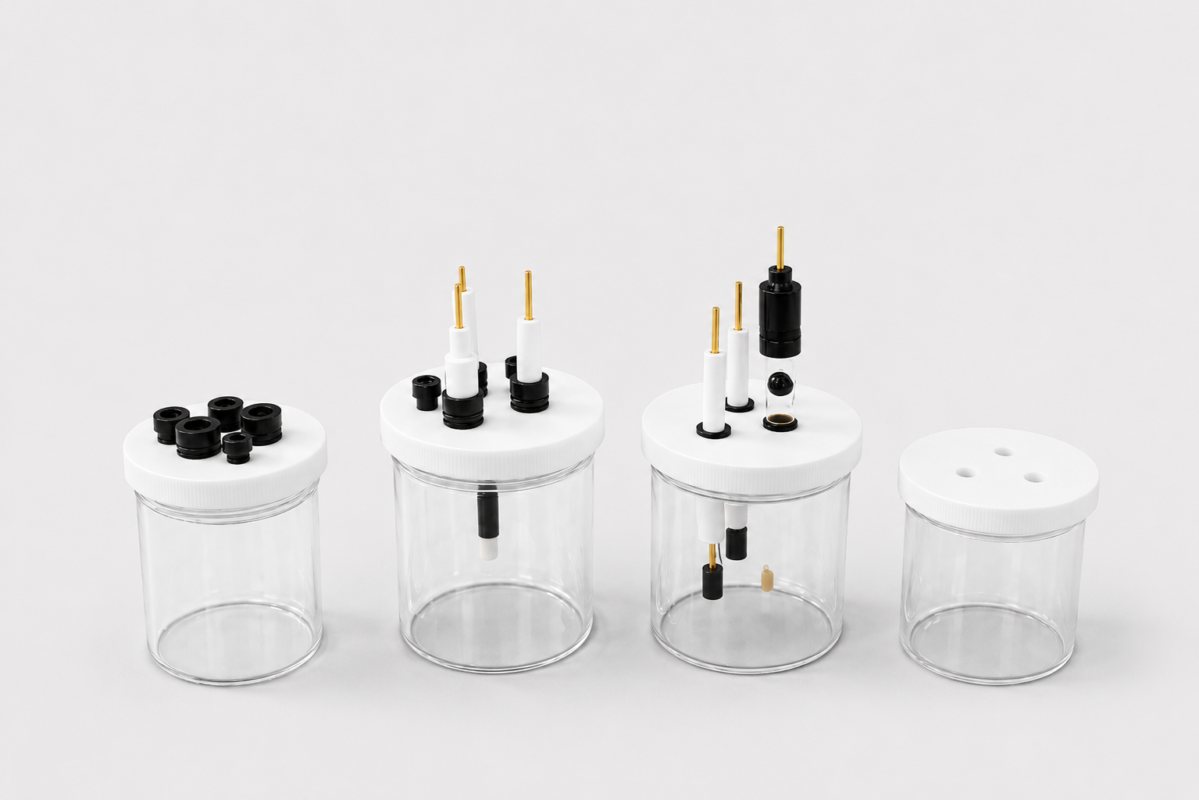
Designed for gas-tight experiments and high-precision electrochemical measurements. Durable structure with customizable electrode ports to fit your research needs.
Unstable electrochemical data is often caused by poor system control rather than the potentiostat itself. Learn the common causes of noise, oscillation, drift, and unstable CV/EIS results in electrochemical experiments.
This guide explains how electrochemical cell design affects data stability, reproducibility, and experimental accuracy, covering sealed cells, H-type cells, corrosion testing cells, and common electrochemical troubleshooting methods.
This guide explains how electrochemical system design affects data stability, sensitivity, and reproducibility, covering electrodes, electrolytes, electrochemical cells, and common troubleshooting methods.
This guide explains common causes of unstable electrochemical data, including electrode contamination, wiring issues, electrolyte problems, and improper experimental configurations in electrochemical systems.
Learn how to properly polish and prepare electrochemical electrodes for accurate and reproducible measurements. This practical guide covers electrode surface preparation methods, polishing materials, cleaning steps, and best practices for glassy carbon, gold, and platinum electrodes used in electrochemistry experiments.
This corrosion resistance table compares PEEK, PTFE, and PVDF electrode sleeves across 150+ chemicals, providing essential data for material selection in electrochemical sensors and laboratory applications.
A complete guide to electrochemical electrode types, including working electrodes (WE), reference electrodes (RE), and counter electrodes (CE). Learn how to choose the right electrode materials and configurations for CV, EIS, electrocatalysis, corrosion studies, electrolysis, and CO2 reduction experiments.
Learn the principles, advantages, and limitations of 2-electrode, 3-electrode, and 4-electrode electrochemical systems. This practical guide explains current paths, potential control, iR drop, and how to choose the right configuration for CV, EIS, batteries, corrosion studies, and impedance measurements.
Please read these Terms & Conditions carefully. By accessing and purchasing from Potentiolab, you agree to the rights and obligations set out below regarding the sale and use of our electrochemical research products.