

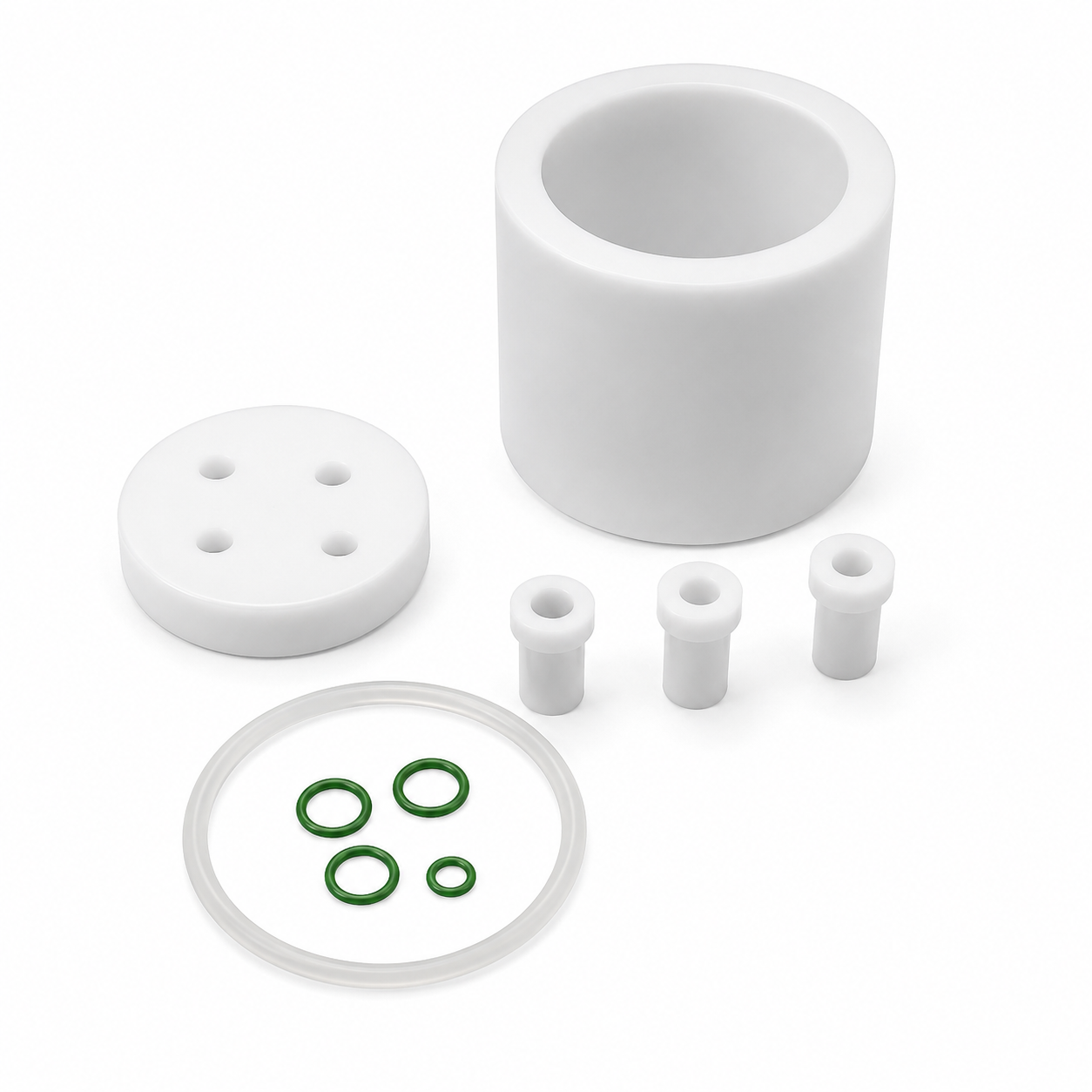

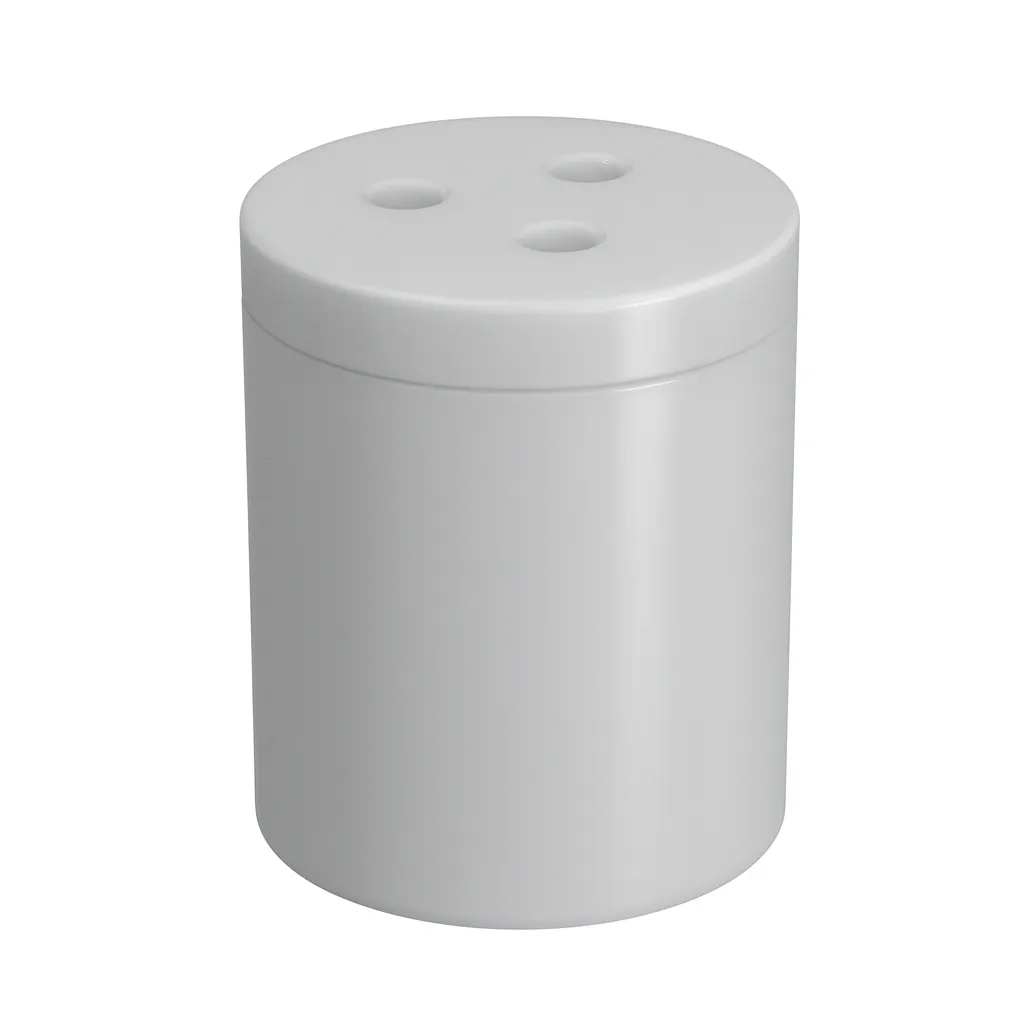



FPS-1 PTFE Non-Sealed Electrochemical Cell
Price range: $62.00 through $250.00
PTFE Electrochemical Cell Series — chemically inert PTFE cells with volumes from 10–500 mL, available in non-sealed or fully sealed configurations, ideal for electrocatalysis, materials screening, corrosion studies, and electrochemical synthesis.
| Size |
100ml Full PTFE Electrochemical Cell – Unsealed ,10ml Full PTFE Electrochemical Cell – Unsealed ,150ml Full PTFE Electrochemical Cell – Unsealed ,200ml Full PTFE Electrochemical Cell – Unsealed ,20ml Full PTFE Electrochemical Cell – Unsealed ,300ml Full PTFE Electrochemical Cell – Unsealed ,30ml Full PTFE Electrochemical Cell – Unsealed ,500ml Full PTFE Electrochemical Cell – Unsealed ,50ml Full PTFE Electrochemical Cell – Unsealed |
|---|
“`html
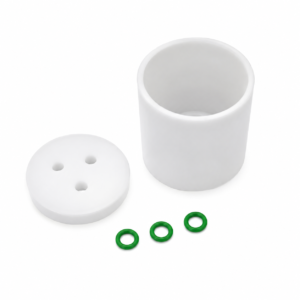
Potentiolab All-PTFE Three-Electrode Electrochemical Cell
The Potentiolab all-PTFE electrochemical cell is a chemically resistant reaction vessel designed for standard three-electrode electrochemical experiments. It is available in both sealed and unsealed configurations, making it suitable for routine electrochemical testing, gas-controlled experiments, corrosion studies, and custom laboratory setups.
Manufactured from high-purity PTFE, the cell provides excellent resistance to acids, alkalis, and most organic solvents, while supporting flexible electrode and gas port arrangements.
Product Versions
1. PTFE Non-Sealed Electrochemical Cell
Designed for standard three-electrode measurements where gas-tight sealing is not required. The open or semi-open structure allows easy electrode insertion, fast electrolyte exchange, and convenient cleaning.
Recommended for: CV, LSV, EIS, catalyst screening, teaching laboratories, and routine electrochemical measurements.
2. PTFE Sealed Electrochemical Cell
Designed for controlled-atmosphere, volatile electrolyte, or gas-involved electrochemical experiments. The threaded PTFE sealing structure helps reduce evaporation, contamination, and gas leakage during long-term electrolysis.
Recommended for: CO₂RR, ORR, NRR, HER/OER studies, gas purging experiments, and long-term electrolysis.
Threaded Sealing Components
- PTFE lid
- PTFE cell body
- 6.2 mm electrode ports
- 6.2 mm PTFE threaded nuts
- FKM sealing rings for electrode ports
- FKM sealing ring for the main cell body
- Optional gas inlet / outlet ports
PTFE Material Properties
| Property | Description |
|---|---|
| Chemical Resistance | Resistant to strong acids, alkalis, water, and most organic solvents |
| Temperature Resistance | Suitable for long-term use at 200–260°C, depending on experimental conditions |
| Low Temperature Performance | Maintains flexibility at low temperatures, down to approximately -100°C |
| Low Surface Energy | Non-stick surface with low adsorption of reactants and products |
| Electrical Insulation | Excellent insulating performance for electrochemical cell construction |
Technical Specifications
| Cell Material | High-purity PTFE |
| Cell Type | Sealed / Non-sealed |
| Volume Range | 10 mL, 20 mL, 30 mL, 50 mL, 100 mL, 150 mL, 200 mL, 300 mL, 500 mL |
| Electrode System | Standard three-electrode configuration |
| Electrode Port Diameter | 6.2 mm |
| Compatible Electrodes | Working electrode, counter electrode, reference electrode, gas tube |
| Sealing Components | PTFE threaded nuts and FKM sealing rings |
Typical Applications
- Three-electrode electrochemical measurements
- Cyclic voltammetry and linear sweep voltammetry
- Electrochemical impedance spectroscopy
- Electrocatalyst screening
- CO₂ reduction reaction studies
- HER, OER, ORR, and NRR research
- Corrosion and passivation studies
- Electrochemical synthesis
- Gas purging and sealed electrolysis experiments
Sealed vs Non-Sealed Version
| Feature | Non-Sealed Cell | Sealed Cell |
|---|---|---|
| Open access | Excellent | Limited |
| Gas-tight operation | Not supported | Supported |
| Gas purging | Optional / limited | Recommended |
| Volatile electrolyte handling | Limited | Good |
| Long-term electrolysis | Suitable for routine tests | More suitable |
Instructions for Use
Sealed Electrochemical Cell:
- Place the main FKM sealing ring onto the PTFE cell body.
- Insert the working electrode, counter electrode, reference electrode, and gas tubes into the lid ports.
- Secure each port using PTFE threaded nuts and FKM sealing rings.
- Tighten the PTFE lid to the cell body to form an airtight structure.
- The cell is ready for standard three-electrode operation.
Non-Sealed Electrochemical Cell:
- Insert the electrodes through the PTFE cap or fixed electrode base.
- Adjust the electrode position according to the experimental setup.
- Add electrolyte and connect the electrodes to the potentiostat.
- The cell is ready for routine three-electrode testing.
Customization Options
- Custom volume or cell geometry
- Additional electrode ports
- Gas inlet and outlet ports
- PTFE electrode holders
- Reference electrode adapters
- Sampling or stirring ports
Recommended for: Researchers who need a chemically resistant PTFE electrochemical cell for routine testing, harsh electrolytes, gas-controlled experiments, or customized three-electrode electrochemical systems
Related products
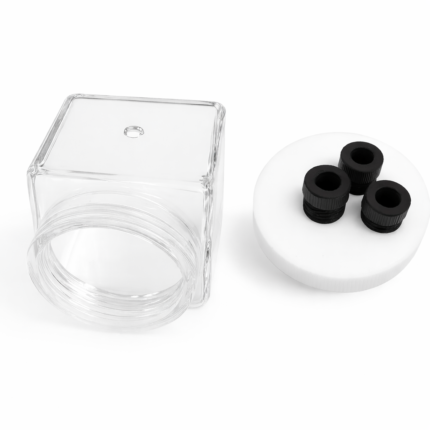
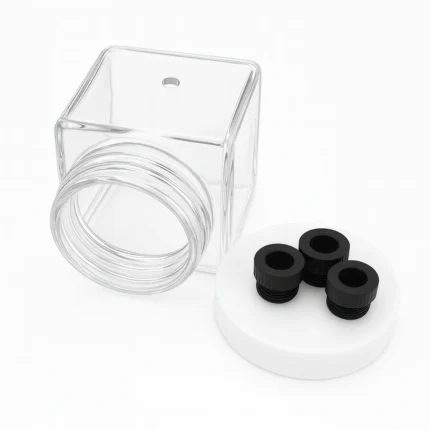
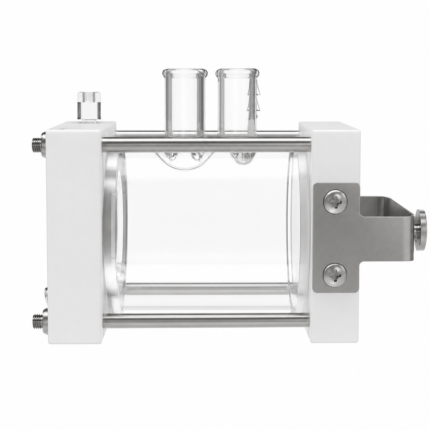
LVS-1 Large Volume Sealed Electrochemical Cell



SE1 Sealed Electrochemical Cell [30ml-1000ml]
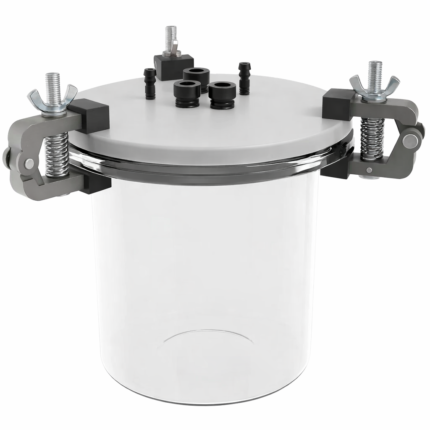
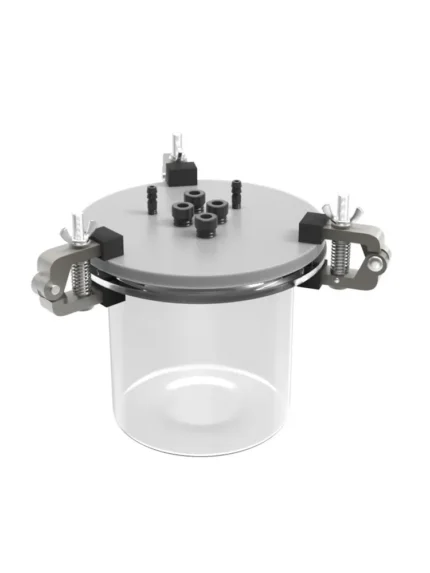
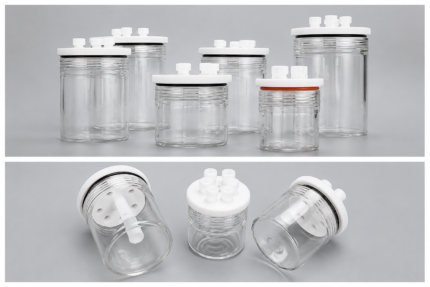
Sealed Electrochemical Cell – A fully enclosed reactor for controlled-environment electrochemistry, ensuring gas isolation, electrolyte stability, and reproducibility.
With airtight sealing and modular electrode access, it's ideal for long-term electrolysis, gas-involved reactions, and sensitive mechanistic studies. Available from 30 mL to 1000 mL, supporting both small-scale screening and extended testing.

Reviews
There are no reviews yet.