


POTENTIOLAB STANDARDS
Quality & Engineering
Electrochemical results are shaped by the entire system — electrode materials, geometry, electrolyte compatibility, and measurement setup. We focus on engineering-grade details so your experiments are reproducible, stable, and easy to scale from lab trials to real workflows.
System Design
Verification
Precision
Reproducibility
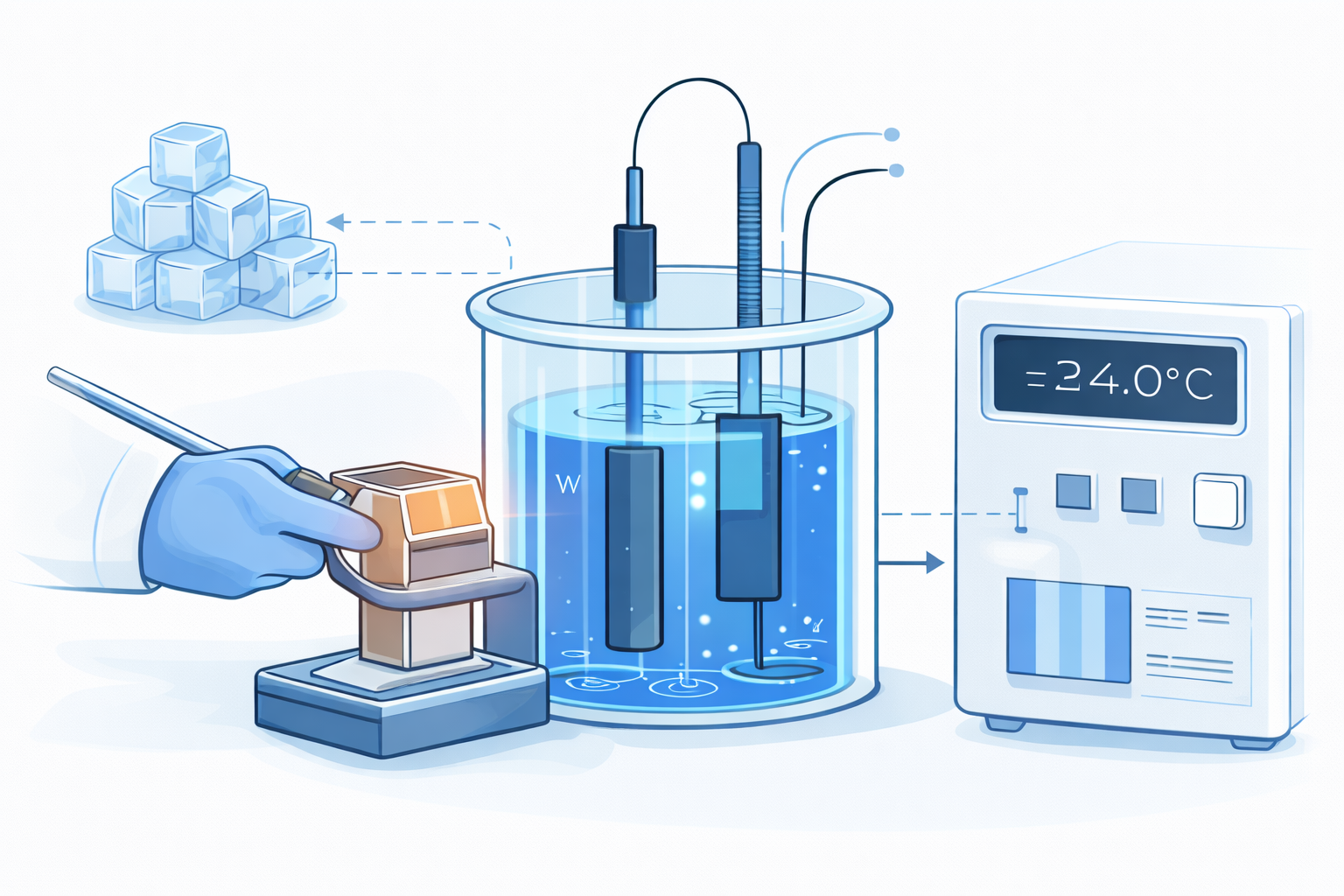
System-Level Design
Clear electrode roles, stable wiring, and controlled geometry — designed to reduce drift and improve repeatability.
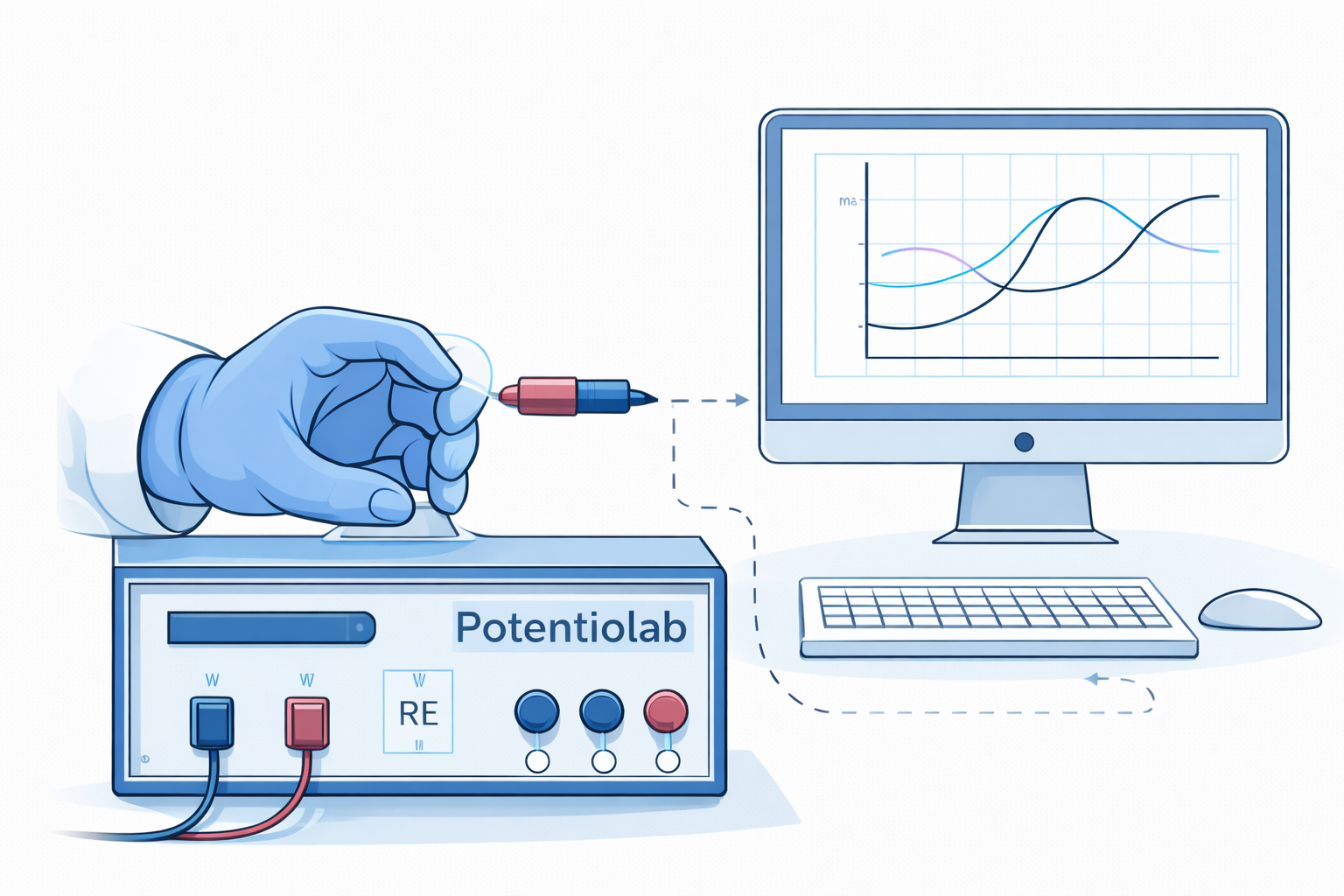
Verification & Consistency
Inspection-minded workflows and practical validation — built for reliable measurements across days, users, and labs.
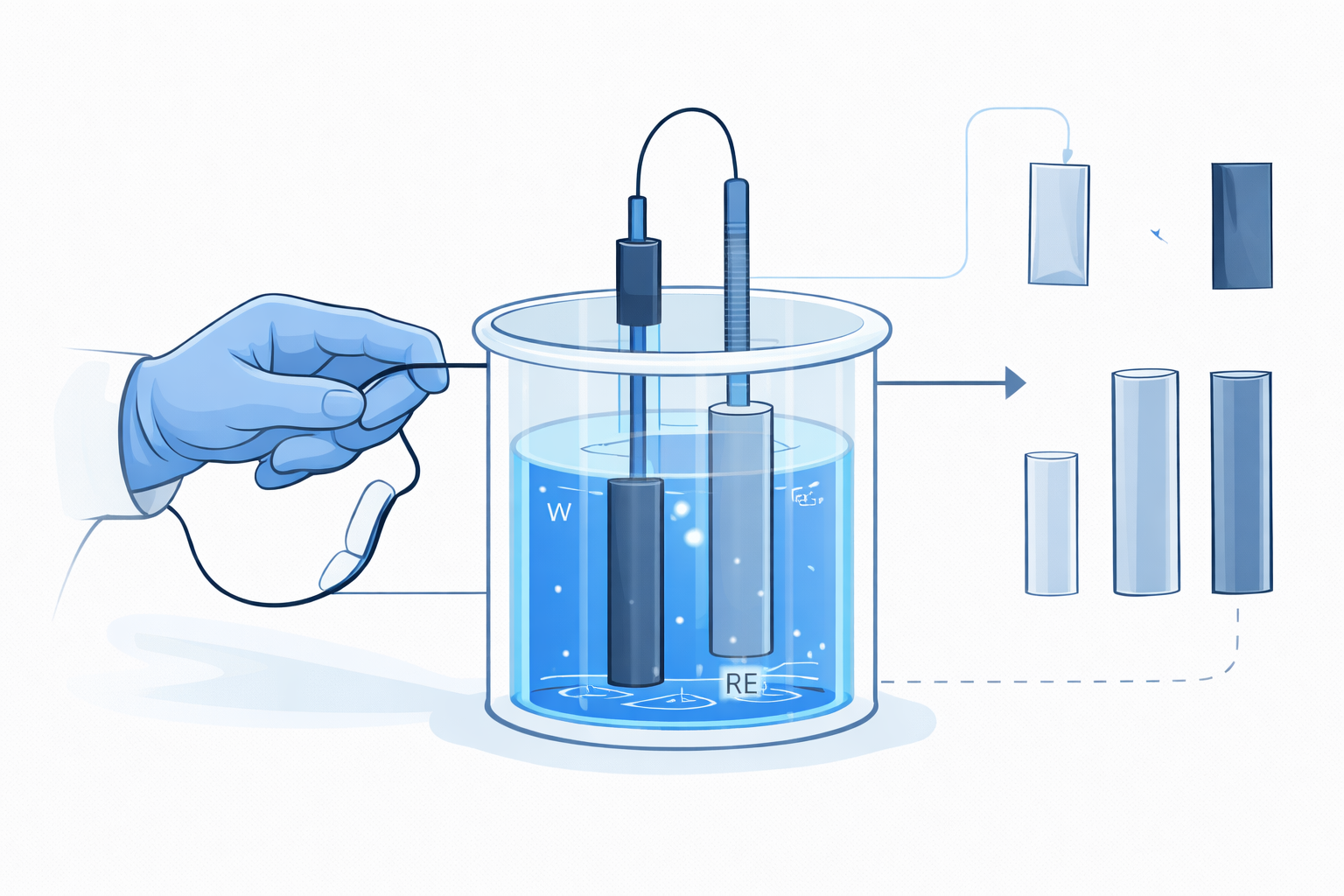
Precision Engineering
Tight tolerances, robust materials, and practical form factors — engineered for real electrochemical setups.
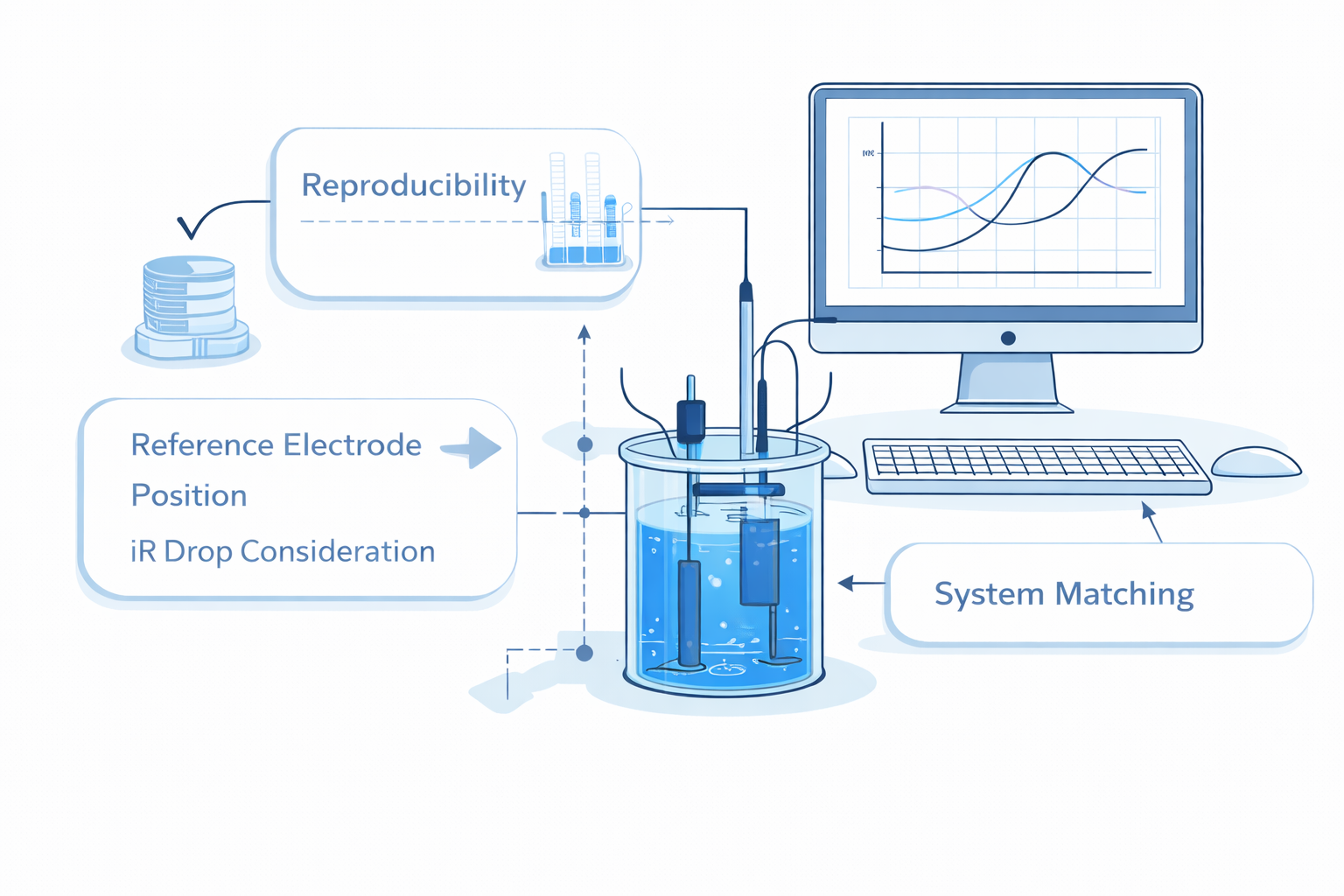
Reproducibility by Design
Reference electrode positioning, iR-drop awareness, and system matching — the details that protect your data.
ENGINEERING DEPTH
Good data is not measured — it is engineered.
We reduce hidden variables in real workflows by controlling surfaces, geometry, connections, and compatibility —
so the behavior you measure reflects the system you intended.
Surface control
Geometry repeatability
Low-noise wiring
System matching
Materials & Compatibility
- Stable materials for target electrolytes
- Seal/insulator selection for leakage control
- Surface finishing for repeatable interfaces
Dimensional Control
- Defined working area & immersion depth
- Alignment for consistent geometry
- Robust fixtures for stable positioning
Measurement Integrity
- Reference electrode placement awareness
- iR-drop & field distribution consideration
- Low-noise connections for stable curves
If you’re unsure which configuration fits your electrolyte and current scale, send us your system details — we’ll recommend a stable setup.
ENGINEERING PRACTICES
Practical standards that protect your data quality
These are small, repeatable actions we emphasize to keep your electrochemical system stable — especially when results drift across days, users, or setups.
Repeatability first
System-aware
Lab workflow
Electrode Surface Treatment Consistency
Use a consistent polishing/cleaning protocol and define surface state before measurements to reduce day-to-day drift.
Immersion Depth Control
Fix immersion depth and exposed area to keep current density and mass transport consistent between runs.
Reference Electrode Placement Standards
Keep the reference electrode position repeatable and close to the working electrode to reduce potential error from solution resistance.
Electrolyte Compatibility Mapping
Match electrode materials and seals to your electrolyte window (aqueous/non-aqueous/high-temp) to avoid hidden reactions and contamination.
Want a quick recommendation? Share your electrolyte, current range, and target reaction — we’ll suggest a stable electrode/cell configuration.