


Quartz, Glass, or PTFE How to Choose the Right Photoelectrochemical Cell

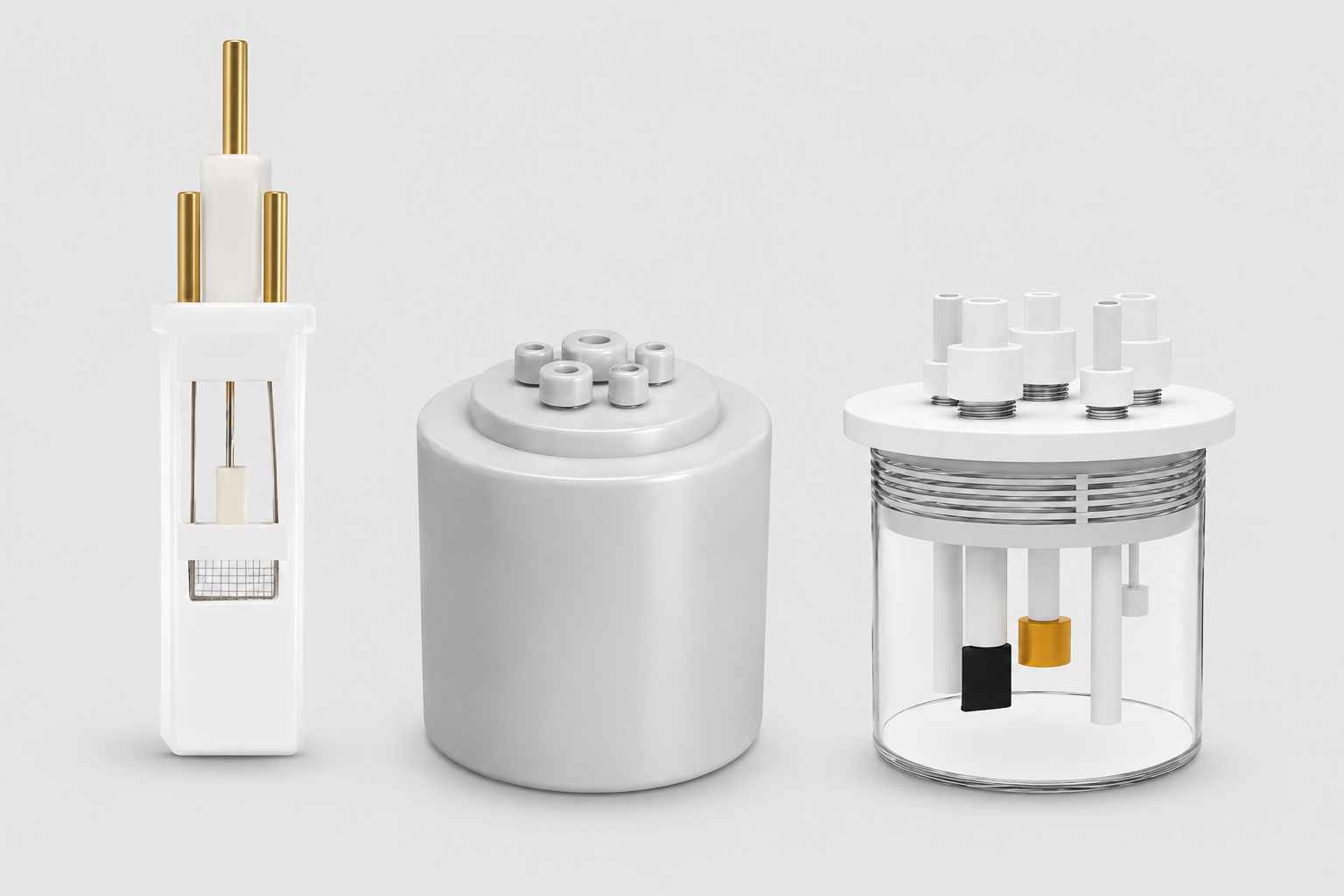
Quartz, Glass, or PTFE? How to Choose the Right Photoelectrochemical Cell
Choosing the right PEC cell material can directly affect optical transmission, chemical compatibility, temperature stability, and long-term experimental reliability. This guide compares quartz, borosilicate glass, and PTFE for photoelectrochemical and spectroelectrochemical research.
Photoelectrochemical cells are used for light-driven electrochemical reactions such as water splitting, CO₂ reduction, photocurrent measurement, semiconductor testing, and in-situ spectroelectrochemistry. Many researchers focus on electrodes and potentiostats first, but the cell body material is just as important.
In most laboratory PEC systems, the common choices are high borosilicate glass, quartz glass, and PTFE. Each material works well in different conditions, so the best choice depends on your electrolyte, light source, temperature range, and optical requirements.
What Is a Photoelectrochemical Cell?
A photoelectrochemical cell is an electrochemical reactor designed for experiments where light interacts with an electrode surface. It allows illumination of the working electrode while measuring photocurrent, voltage, impedance, or catalytic response.
- Photoelectrochemical water splitting
- HER / OER studies
- CO₂ reduction
- Semiconductor photocurrent testing
- UV–Vis and Raman spectroelectrochemistry
- Quartz optical window
- Working, counter, and reference electrodes
- Gas inlet and outlet ports
- Water jacket for temperature control
- H-type or single-compartment chamber
Three Common PEC Cell Materials
A practical choice for routine electrochemical testing with standard electrolytes.
- Good chemical stability
- High temperature resistance
- Transparent for visual observation
- Cost-effective for general use
Best for optical experiments where UV–Vis transmission and light access are critical.
- Excellent UV–Vis–IR transmission
- Ideal for spectroelectrochemistry
- Suitable for solar simulators and LEDs
- Excellent corrosion resistance
Preferred when the electrolyte is highly corrosive or long-term sealing stability is required.
- Outstanding chemical resistance
- Resistant to strong acids and alkalis
- Excellent sealing performance
- Suitable for aggressive media
Understanding the Trade-Offs
The biggest trade-off is usually between optical transparency and chemical resistance. Quartz provides the best optical window for illuminated experiments, while PTFE provides stronger chemical resistance and sealing performance.
For experiments involving hydrofluoric acid (HF), quartz and borosilicate glass should be avoided because HF attacks silica-based materials. In this case, PTFE is the safer and more reliable cell body material.
Material Comparison at a Glance
| Material | Key Properties | Best For | Main Limitation |
|---|---|---|---|
| High Borosilicate Glass | Good chemical stability, high temperature resistance, cost-effective | General electrochemistry with standard electrolytes | Not resistant to hydrofluoric acid |
| Quartz Glass | Excellent UV–Vis–IR light transmission and strong optical clarity | Spectroelectrochemistry, UV measurements, solar simulator experiments | Higher cost and not resistant to HF |
| PTFE | Excellent chemical inertness, strong sealing performance, resistant to HF | Highly corrosive electrolytes, long-term electrolysis, corrosion studies | Opaque; requires separate optical windows for light transmission |
H-Type vs Single-Compartment PEC Cells
H-type cells use two separated chambers connected by a membrane, frit, or salt bridge. They are useful for gas separation, HER/OER research, and preventing cross-contamination.
Single-compartment cells place all electrodes in one chamber. They are simpler and suitable for routine photocurrent measurements, screening tests, and basic light-driven experiments.
Why Jacketed PEC Cells Are Useful
Jacketed PEC cells use a double-layer wall that allows circulating fluid to control temperature. This helps keep reaction conditions stable during high-power illumination, long electrolysis, semiconductor studies, and spectroscopic measurements.
Maintenance Tips
- Handle carefully to avoid scratches or cracks
- Clean with dilute acid or solvent rinses
- Avoid strong mechanical impact
- Dry completely before reuse
- Avoid direct flame exposure
- Clean with ethanol or neutral detergent
- Keep sealing surfaces free of contamination
- Dry properly before assembly
Which Material Should You Choose?
- Choose quartz if optical transparency, UV–Vis analysis, Raman measurement, solar simulator testing, or spectroelectrochemistry is required.
- Choose PTFE if the electrolyte is highly corrosive, long-term electrolysis is needed, or gas-tight sealing is important.
- Choose borosilicate glass if you need a practical and cost-effective cell for standard electrochemical testing with mild electrolytes.
Photoelectrochemical Cell FAQ
What is the purpose of the quartz window in a PEC cell?
The quartz window allows UV–Vis light, solar simulator radiation, or laser illumination to reach the photoelectrode with minimal optical distortion.
Can PEC cells be customised?
Yes. Optical window diameter, chamber volume, gas ports, electrode layout, water jacket, and optical couplers can be configured for specific research needs.
What experiments can be performed with a PEC cell?
PEC cells are commonly used for water splitting, HER/OER, CO₂ reduction, semiconductor analysis, photocurrent measurement, and in-situ spectroelectrochemistry.
Need Help Selecting the Right PEC Cell?
Tell us your light source, electrode configuration, electrolyte system, required volume, and optical requirements. Potentiolab can help configure the right PEC cell solution for your laboratory application.